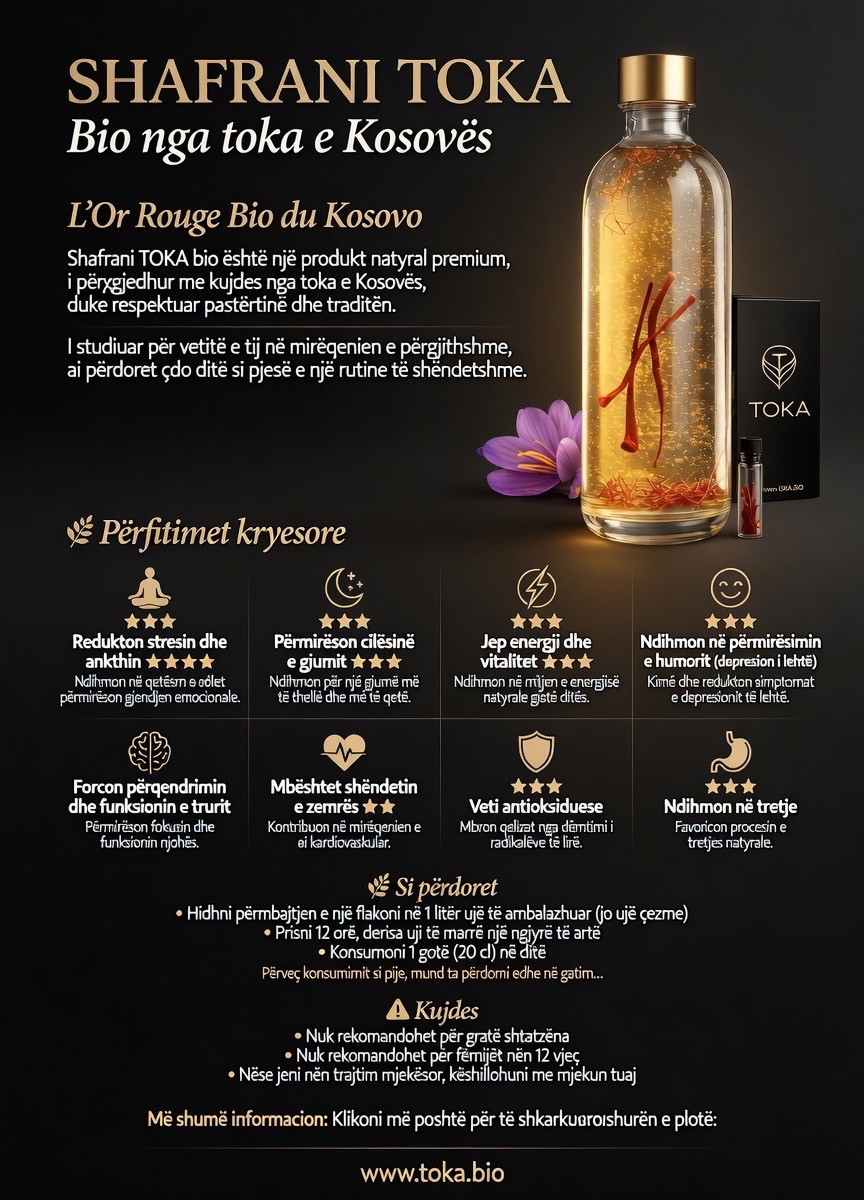
Discover the extraordinary benefits of saffron, an ancient spice renowned for its remarkable healing properties. Referenced in the Ebers Papyrus, the oldest known medical treatise, saffron stands as one of the most studied plants — with over 5,600 global initiatives and biomedical studies exploring its medicinal properties and composition.
Research suggests that saffron has the potential to help prevent up to 600 different conditions, exerting a positive influence on the body in 175 distinct ways. Rightly known as "the spice of joy and happiness", saffron is no coincidence of nature.
Experience the rich history of saffron cultivation, beginning in the 15th century with Kosovo as a centre for its growing and export. Discover the secrets of an ancient culture and tradition, where deep knowledge of saffron cultivation has been passed down through generations.
TOKA is a company founded in Kosovo with a single purpose: to produce the finest saffron in the world. We cultivate our saffron without any chemicals or herbicides, and our products are independently certified organic. Every product undergoes a rigorous process — from planting to packaging and transport — and is analysed and certified annually.
Saffron comes from a cultivated crocus: Crocus sativus L. — a monocotyledonous bulbous plant belonging to the order Liliales and the family Iridaceae. Crocus sativus is unique in that it blooms in autumn (from October to November), much like the autumn crocus Colchicum autumnale.
For thousands of years, saffron has been used to address the most complex health concerns:
Powerful antioxidant — Saffron is known for its antioxidant effects, as the flower contains crocin, carotenoids and safranal, which work against cellular ageing.
Powerful anti-inflammatory — An excellent way to fight infections of all kinds. Saffron is highly beneficial for toothaches, ear infections and joint pain. It also significantly reduces post-menstrual symptoms (headaches, stomach cramps) and menopause symptoms (hot flushes).
Reduces stress and depression — One of saffron's primary uses. Safranal contains active antidepressant compounds that act on the nervous system to restore emotional balance. It also reduces sleep disturbances, positively influencing mood.
Anti-cancer properties — Saffron carotenoids have shown positive properties in cancer prevention.
Digestive support — Saffron promotes digestion and cleanses the liver. It also reduces appetite by providing a feeling of fullness.
Diabetes and triglycerides — Saffron has been shown to lower blood sugar and cholesterol levels, improving the health of those with diabetes and high triglycerides — thereby reducing cardiovascular risk.
Vision support — Saffron helps combat retinal tissue degeneration. This spice benefits the visual system in older adults and helps stabilise cataract conditions.
Memory enhancement — Crocus has shown its ability to slow neuronal degeneration in those suffering from degenerative diseases such as Alzheimer's. It also improves cognitive abilities in those with attention deficit and hyperactivity disorders.
Sexual health — Saffron is a powerful aphrodisiac. It increases desire and stimulates erection in men, while enhancing libido in women.
Energy and vitality — Thanks to its active compounds, saffron fights fatigue and boosts energy. It enhances athletic performance and endurance.
Skin benefits — Saffron helps slow cellular ageing, which is why it is often included in pharmaceutical and cosmetic products.
Saffron-infused water
Take a 1.5 L bottle of natural mineral water, add 10 to 15 saffron threads, and let it rest for 12 hours. Once the water turns golden, you may drink one 20 cl glass per day, or add it to your favourite food or beverage.
In a warm beverage
Infusing saffron in a warm liquid is one of the most common methods. Use 3 threads per adult in a warm liquid (water, broth, milk, wine, etc.). Saffron will give the beverage colour and flavour.
In cooking
You can also grind saffron threads in a mill or spice grinder to create a fine powder. This powder can be added directly to dishes during cooking for an even distribution of flavour and colour. Always add saffron at the end of cooking — prolonged exposure to high temperatures may alter its properties and flavour.
Recommended daily dose: 3 to 9 threads for adults.
Taking a high dose (more than 5 g) can be toxic and may cause vomiting or gastrointestinal discomfort.
Concurrent use with antidepressants is not recommended due to similarities in their mode of action.
Saffron is not recommended for pregnant or breastfeeding women. For children under 12 years of age, prior medical advice is recommended.
For the complete brochure, including the full list of 94 conditions where saffron has shown active effects, download the full PDF.
DOWNLOAD PDF